Back in the late ‘80s, behind the Iron Curtain and within earshot of jackhammer communism, a storm was brewing—not in the streets, but in the sweaty rehearsal rooms of Poland. It was the sound of heavy metal rebellion, and no band captured that electric tension quite like TURBO. With Last Warrior, their sixth studio album and their first in English, these Poznań-born riff-slingers ripped through linguistic barriers with all the subtlety of a tank plowing through barbed wire.
Historical Context: When the East Met the Axe
1988 wasn’t just the tail-end of a decade defined by hairspray and double-kick drums. It was a moment when Eastern Europe’s underground metal scene began poking its leather-studded fists through the crumbling façade of the Eastern Bloc. In Poland, a generation of metalmaniacy (metal maniacs) found their voice through bands like Turbo. After years of releasing Polish-language albums like Kawaleria Szatana and Epidemie, Last Warrior marked the band’s first attempt at breaking into the international market. And damn it, they didn’t just knock—they booted the door off the hinges.
Musical Exploration: Thrash with a Touch of Gothic Grit
At its molten core, Last Warrior is a thrash metal record, but it’s no Xerox copy of Slayer or Testament. Turbo doesn’t play it safe. They inject their own flavor of melancholy, melodic dissonance, and eerie atmospherics, likely a byproduct of the Polish winters and post-Soviet grayness. Tracks like The Trojan Horse and Berud’s Sword aren’t just pit fodder—they’re steeped in myth, soaked in dread, and fired through with existential paranoia. It’s thrash with soul, metal with a haunted stare.
The Players: Polish Witches of the Axe
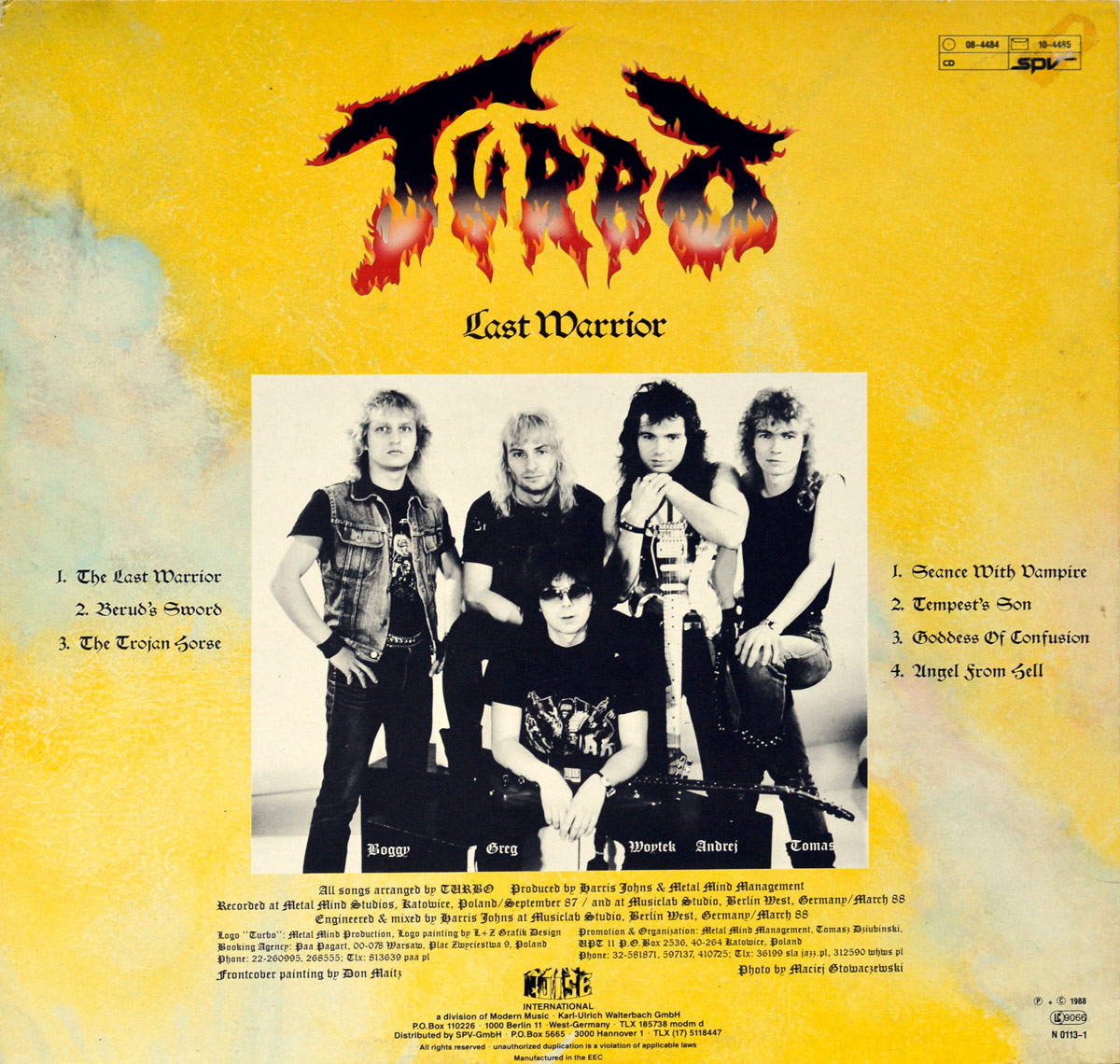
Greg (Grzegorz Kupczyk) delivers vocals with that signature Eastern edge—part operatic wail, part streetwise snarl. Guitarists Woytek (Wojciech Hoffmann) and Andrej (Andrzej Łysów) tear through complex leads and crunchy riffs that owe as much to NWOBHM as they do to early Metallica. Meanwhile, Boggy (Bogusz Rutkiewicz) on bass keeps the low end brooding and tight, while Tomas (Tomasz Goehs) pounds the drums like he’s exorcising communist ghosts from his kit. This wasn’t a band playing metal—they were living it, bleeding it, screaming it through clenched teeth.
Production: Teutonic Precision Meets Polish Grit
Recorded in two vastly different places—Metal Mind Studio in Katowice and the legendary Musiclab Studios in Berlin—Last Warrior is sonically ambitious. The production duties were handled by none other than Harris Johns, a name synonymous with European thrash. This guy cut his teeth with Sodom and Tankard, and here he sculpted Turbo’s raw aggression into a cold, metallic monolith. The dual-studio approach allowed for a blend of Eastern rawness and Western clarity. Katowice lent the record its bleak energy, while Berlin brought out the polish—pun absolutely intended.
Controversies and Challenges
Turbo’s decision to record in English wasn’t universally loved. Some fans cried sellout. Others accused them of abandoning their roots. But in truth, it was a bold act of defiance—a middle finger to imposed borders and cultural isolation. They wanted the world to hear Poland’s metallic heartbeat, and English was the only way through the wall.
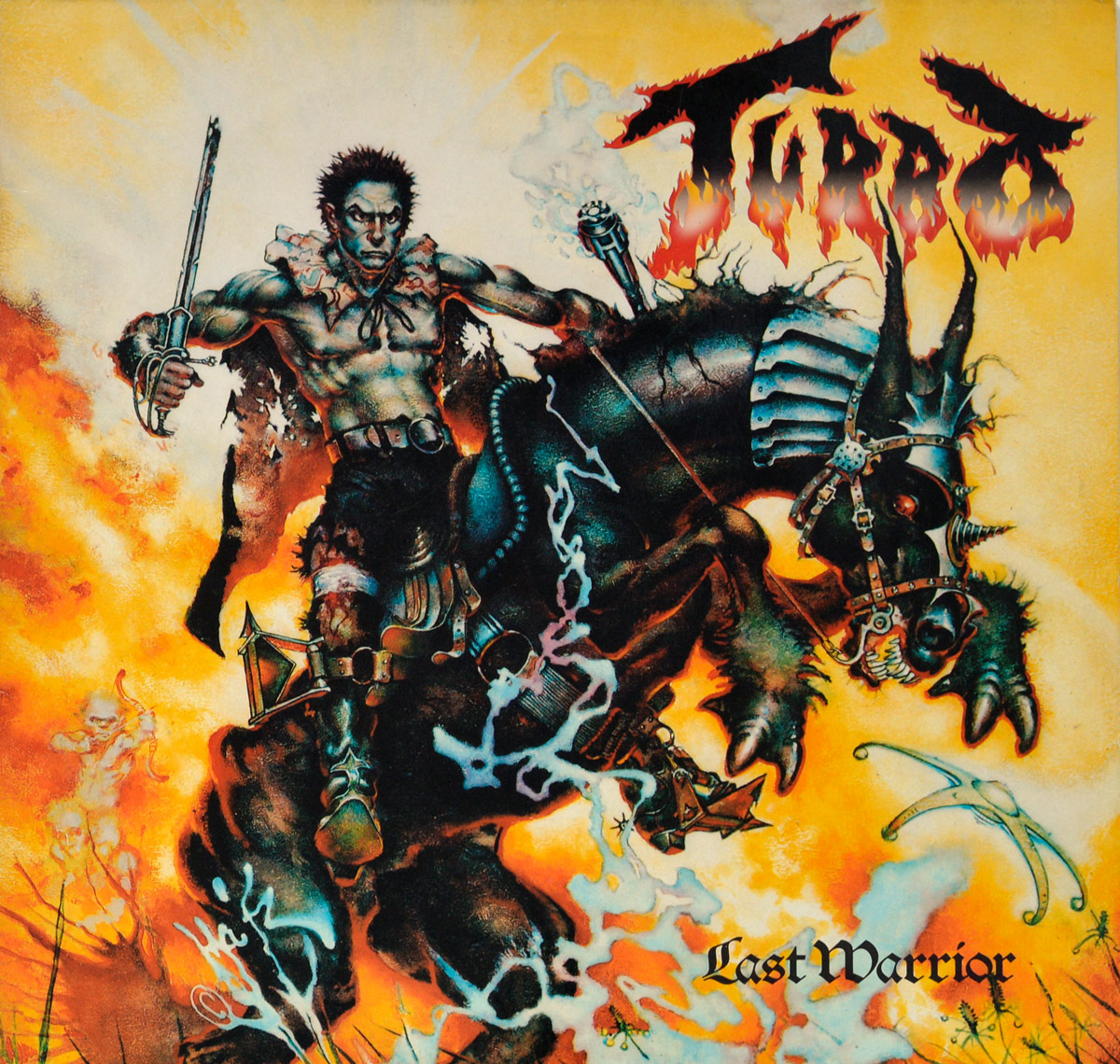
Then there’s the album art—painted by fantasy maestro Don Maitz, better known for giving the Captain Morgan pirate his iconic leer. The artwork for Last Warrior is pure high-fantasy-meets-endtimes—fitting for a band navigating the collapse of one world and the uncertainty of another. In Poland, where the censors had often frowned on aggressive imagery and Western iconography, getting an American artist like Maitz to paint their cover was another act of defiance.
Final Riff
Last Warrior isn’t just an album—it’s a document of defiance, a cry from the East wrapped in chainsaw riffs and galloping rhythms. It’s Turbo grabbing the torch of Western thrash and setting fire to the gray skies of Poznań. For those who lived through it, it was more than music. It was życie na pełnym gazie—life in the fast lane—and no, the brakes were never an option.
|
Album Fact Sheet:
TURBO - Last Warrior (Poland)
|
|
Music Genre:
Thrash Metal
|
|
Album Production Information:
The album: "TURBO - Last Warrior (Poland)" was produced by:
Harris Johns and Metal Mind Management.
Harris Johns – Producer, sound engineerIf your record has that gritty Berlin-concrete punch, there's a decent chance Johns was behind the glass. Read more... Harris Johns is the Berlin-bred producer/engineer who's been putting steel-toed boots on tape since 1978. I first clock him in the late 70s punk grind, then the early 80s when his Music Lab rooms started spitting out Slime (1983) and Daily Terror (1984). Mid-80s through the early 90s he helped define Teutonic thrash for the Noise Records crowd: Grave Digger and Helloween (1984-85), then Sodom, Kreator, Tankard, Voivod and Exumer (1986-88). He kept the soldering iron hot into the 90s-2000s (Sodom again, 1997-2001), later taking on international metal like Enthroned (2004-07). After a decade at his countryside "Spiderhouse," he reopened Music Lab Berlin in 2007 and ran it until 2016 - still producing and teaching the craft.
Sound/Recording Engineer(s): Harris Johns
This album was recorded at:
Metal Mind Studio, Katowice, Poland in September 1987 and Musiclab Studios, Berlin, Germany in March 1988.
Album cover painting: Don Maitz
Dan Maitz is an American science fiction, fantasy, and commercial artist.
Maitz's work covers the broad spectrum of Fantasy & Science Fiction and even horror. He has also painted an extensive collection of pirates, including the pirate on the labels of Captain Morgan rum.
Album cover photography: Maciej Stowaczelwski
|
|
Record Label & Catalognr:
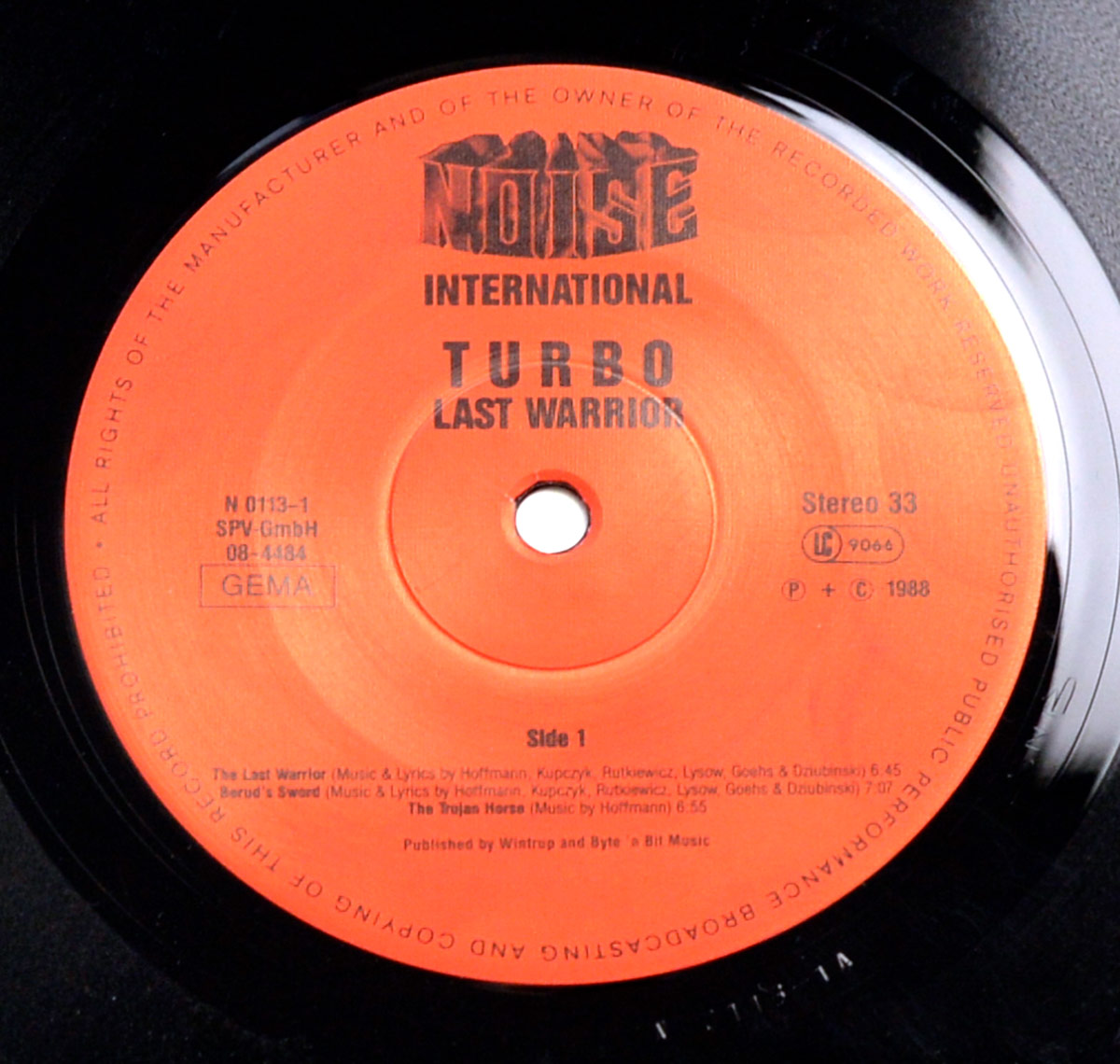
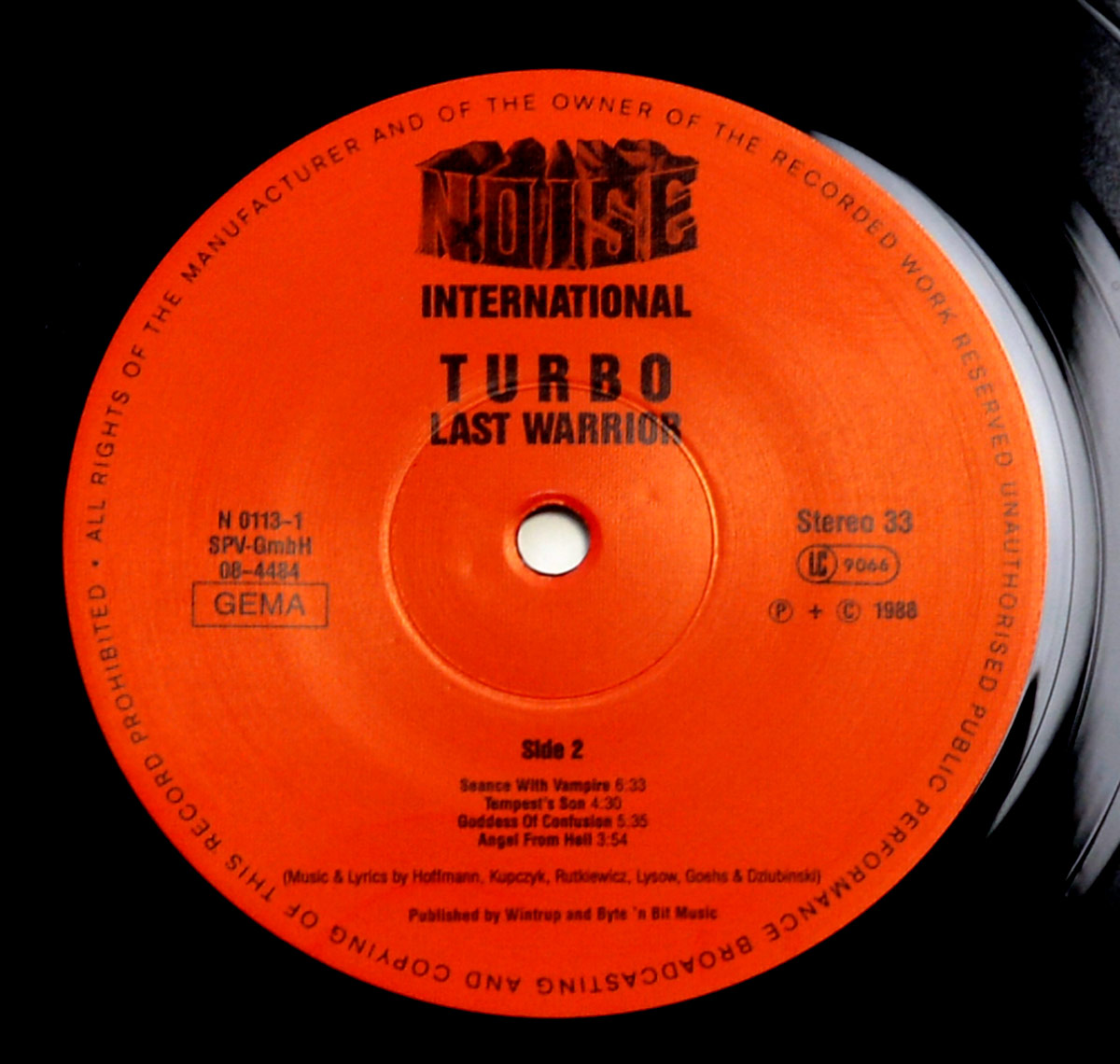
NOISE 0113-1
|
|
Record Format:
12" Vinyl Stereo Gramophone Record
Total Album (Cover+Record) Weight: 230 gram
|
|
Year & Country:
1988 Manufactured in Germany
|