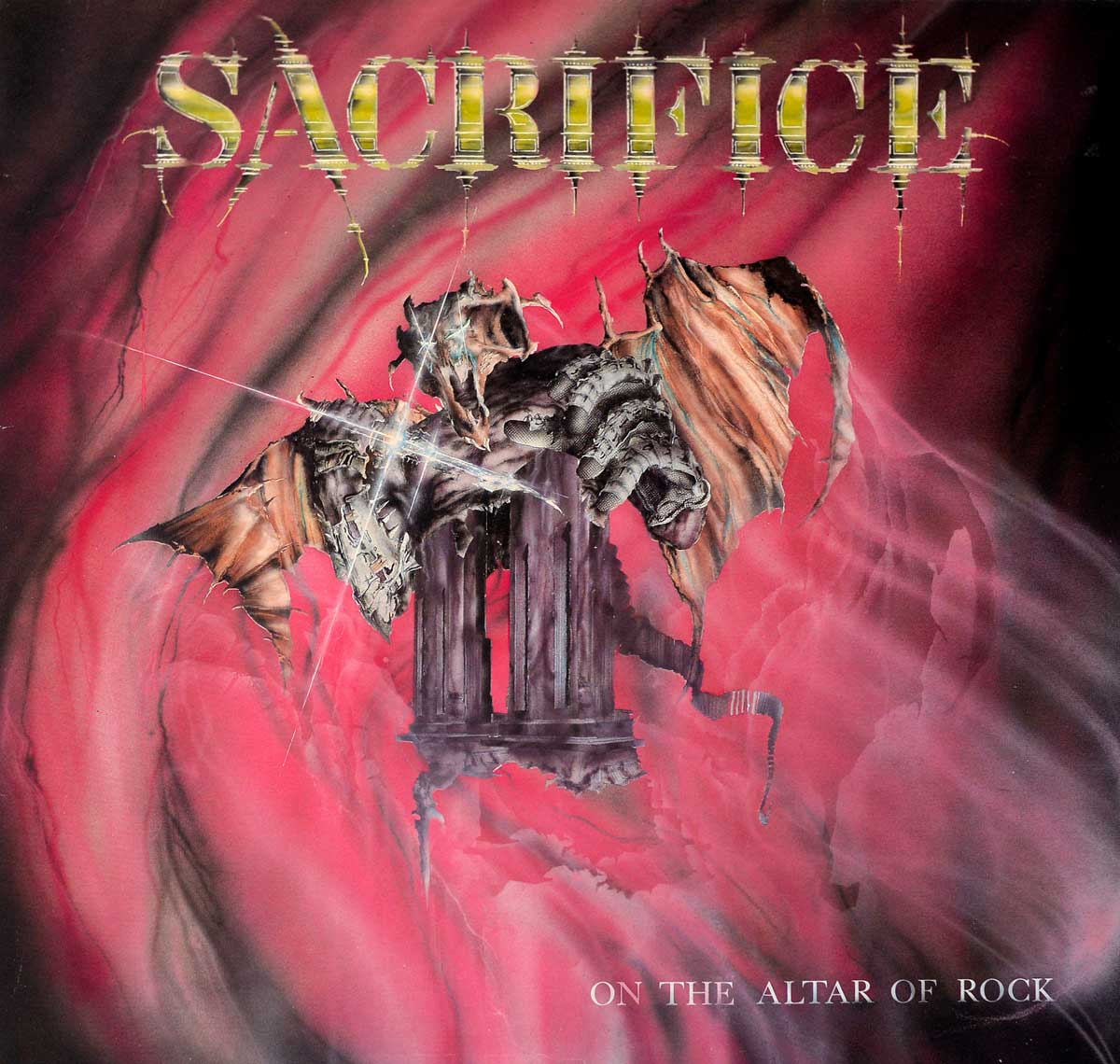
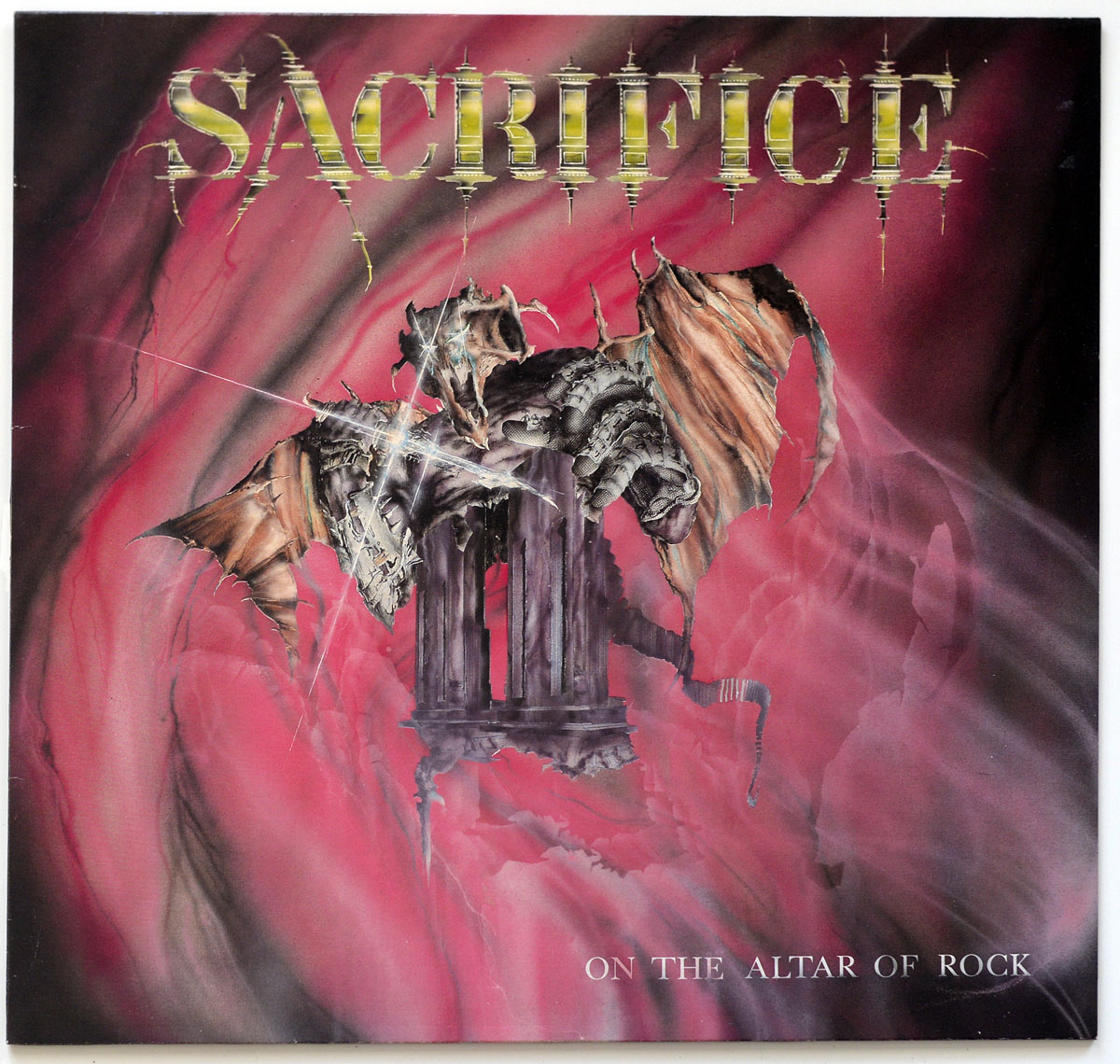
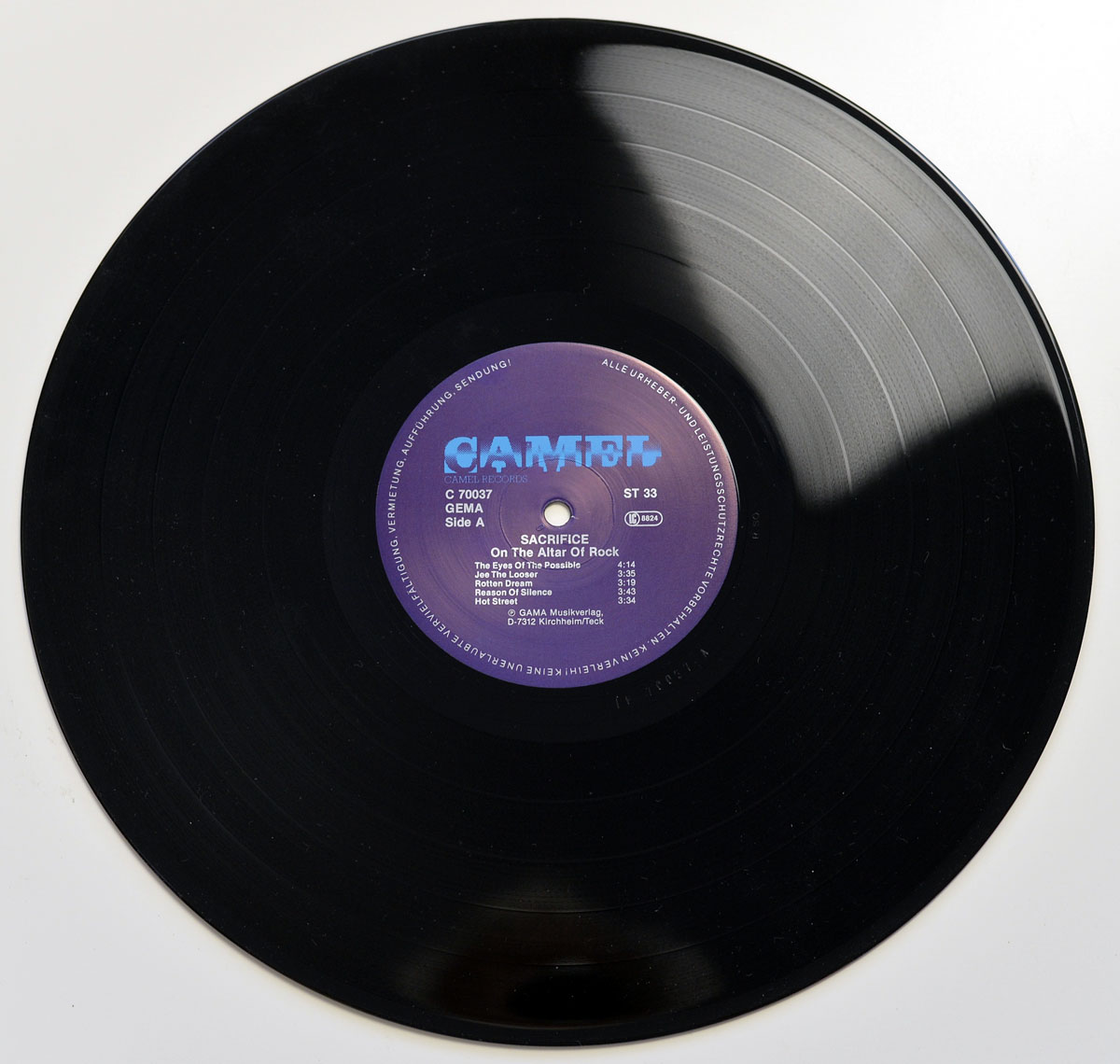
"On The Altar of Rock" (1985) Album Description:
SACRIFICE didn’t make a “career album” here — they made a statement. "On The Altar of Rock" is the kind of mid-80s European metal LP that feels like it was recorded with the lights off, the amps on ten, and the band looking at the clock like, “Yeah, we’ll sleep when we’re dead.” It’s their sole full-length release, and it hits with that hungry, cult-band urgency you only get when a group has everything to prove and absolutely nothing to polish.
1. Introduction on the band and the album
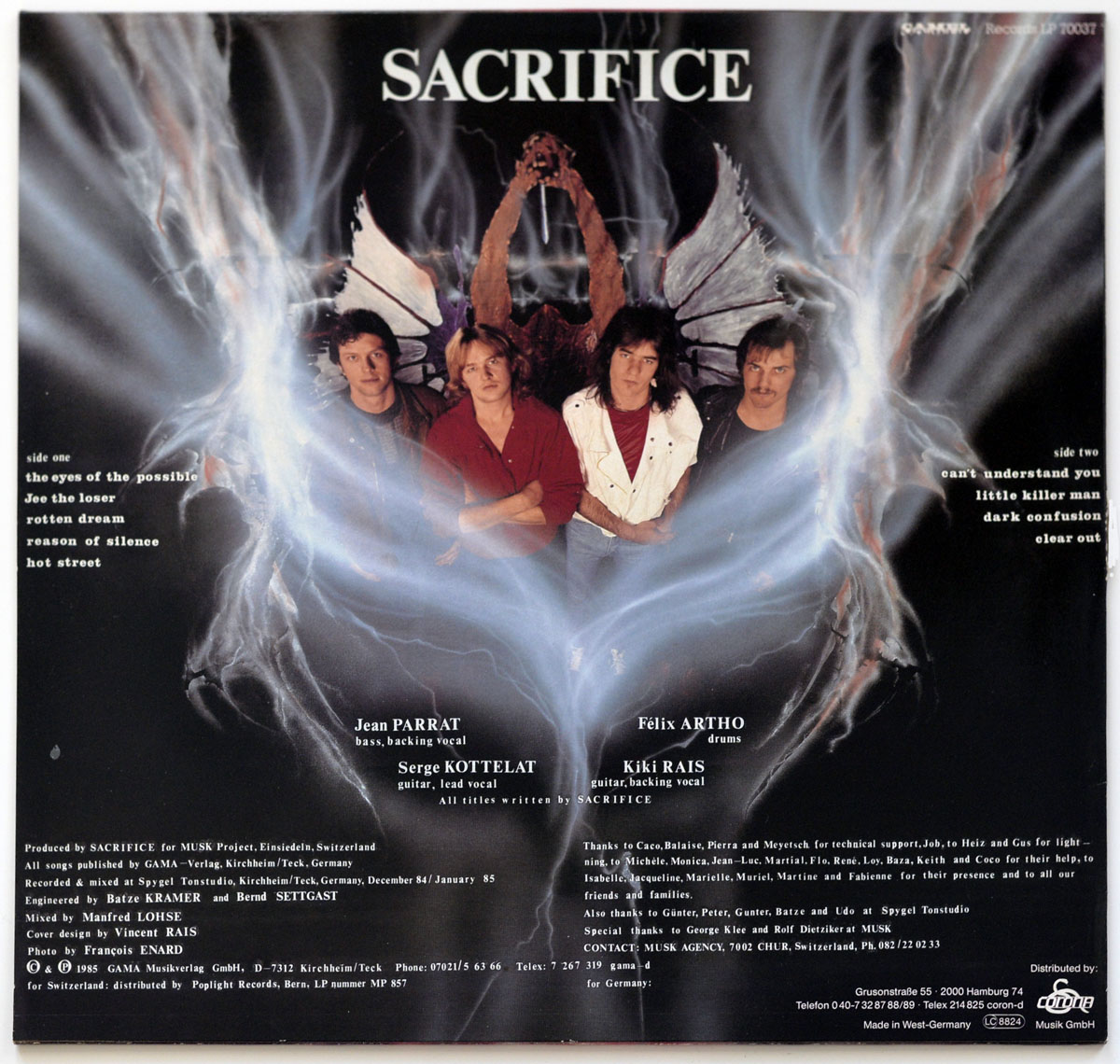
These guys came out of Delemont in the Jura region of Switzerland, formed in 1982, and later changed their name to Jade. This LP is the core document: Serge Kottelat handling guitar and lead vocals, Kiki Rais on second guitar, Jean Parrat on bass, and Felix Artho on drums — a tight four-piece built for speed, riffs, and stubborn conviction.
2. Historical and cultural context
1985 was peak “metal is evolving in real time” energy — traditional heavy metal was getting leaner and faster, and across Europe you could hear bands sprinting toward speed and power metal without losing the street-level grit. In that climate, a Swiss band recording in Germany didn’t feel like a weird detour; it felt like joining the wider continental current where the riffs were sharpening and the patience for slow songs was basically gone.
3. How the band came to record this album
What I love is how self-driven this feels: the album was produced by Sacrifice for Musk Project (based in Einsiedeln, Switzerland), and it was recorded in 1984 at Spygel Tonstudio in Kirchheim, Germany. That’s the sound of a band leaving home turf to get the job done — not because it’s glamorous, but because metal bands don’t wait for perfect conditions. They just find a room, turn up, and swing.
4. The sound, songs, and musical direction
Genre-wise, this is Swiss power speed metal with a very human heartbeat: fast enough to feel risky, melodic enough to stick, and raw enough to keep the edges jagged. The guitars don’t “sparkle” — they bite, they scrape, they shove the songs forward like a biker boot on a stuck engine.
The opener "The Eyes of the Possible" sets the tone: forward motion, no apology, no wasted air. "Joe the Loser" brings that very 80s metal talent for punching a hook into your brain while still sounding like it might fall apart at any second (compliment). When the darker mood creeps in on "Rotten Dream" and "Dark Confusion", it doesn’t feel like theatrics — it feels like the band leaning into a shadow that was already there.
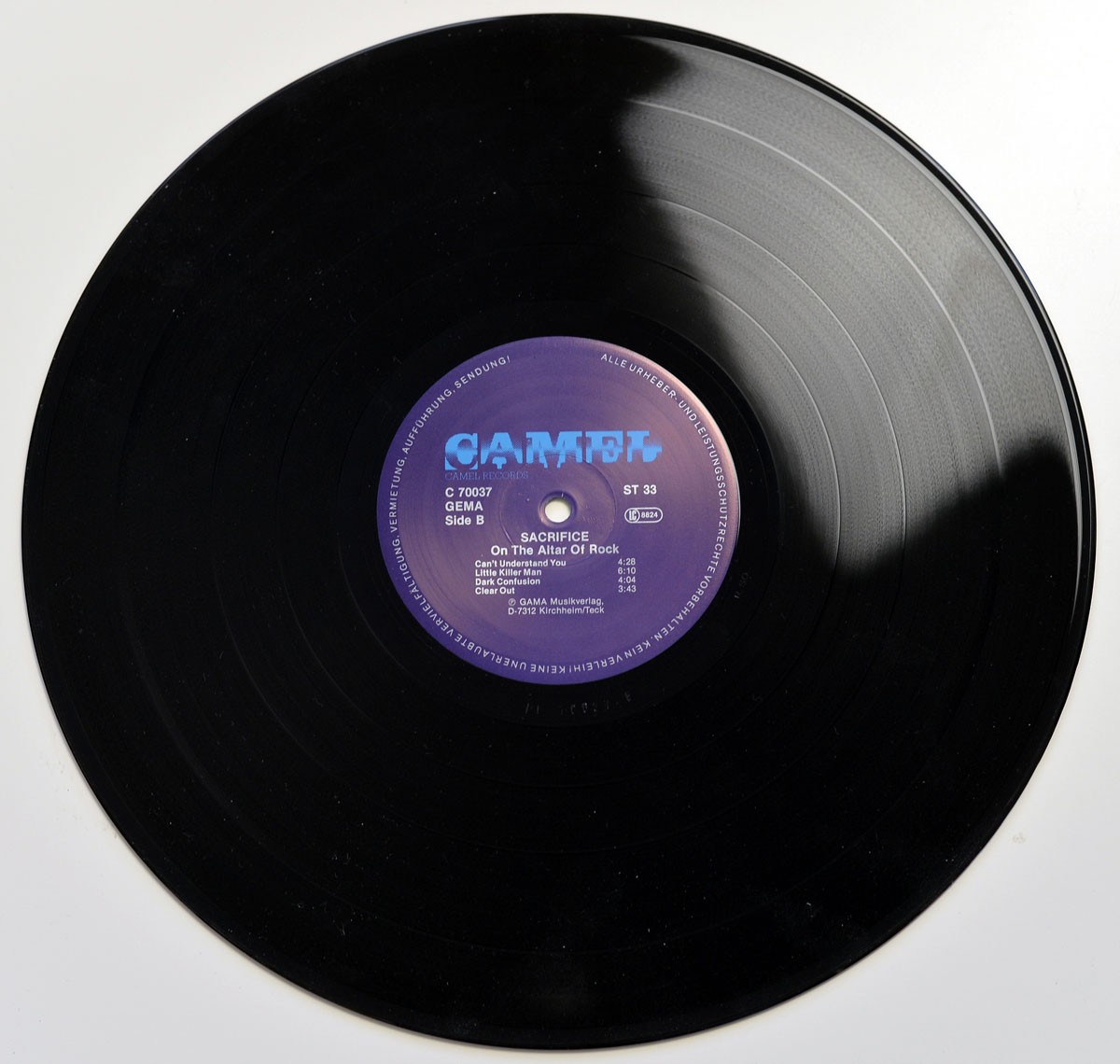
Side Two keeps the pacing mean: "Can’t Understand You" has that half-snarl, half-sing attitude that makes a chorus hit harder, and "Clear Out" closes like a door being slammed on the way out of a club — you’re not invited to argue, you’re invited to turn it up again.
5. Comparison to other albums in the same genre/year
In the broader 1985 metal universe, "On The Altar of Rock" sits in the same fast-blooded neighborhood as the power/speed surge happening all over the map — but it doesn’t chase perfection. It leans into character, not cosmetics, and that’s why it still feels alive.
- Where some 1985 records go for razor-clean momentum, this one keeps a slightly rougher street grip.
- Where others chase epic grandeur, this LP prefers urgency and bite.
- Where the big names can sound “managed,” SACRIFICE sounds like they’re driving the van themselves.
6. Controversies or public reactions
The funniest “controversy” is pure metal bureaucracy: this Swiss Sacrifice is not the Canadian band with the same name, and that confusion has probably cost them a few well-deserved discoveries over the decades. Consider it an accidental smoke screen — annoying for casual listeners, kind of perfect for collectors who enjoy the thrill of finding the “wrong” Sacrifice and realizing it’s actually the right one.
7. Band dynamics and creative tensions
I’m not going to invent backstage drama that isn’t on the sleeve, but you can hear a band that’s unified in purpose: four musicians pulling in the same direction, built around Kottelat’s guitar-and-vocal front line and the twin-guitar punch with Rais. It plays like they knew exactly what they wanted to be in that moment: fast, sharp, and memorable — no committee meetings required.
The later name change to Jade reads like a reset button — maybe practical, maybe creative, maybe both — but this LP captures the band when the identity was fully locked and the energy was still dangerous.
8. Critical reception and legacy
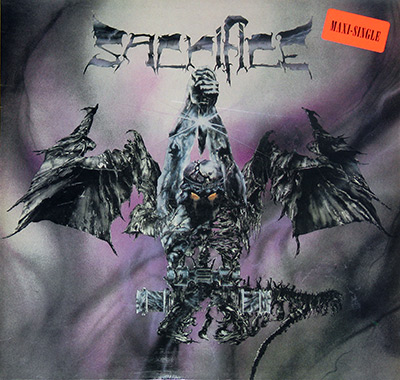
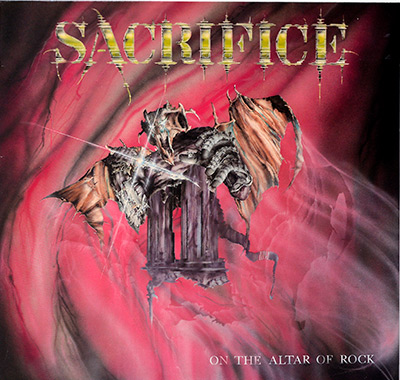
This album lives in that sweet spot collectors love: a genuine cult release with a real-world scene behind it, not a manufactured “lost classic.” It’s also tied to a very specific visual mood — the cover art (designed by Vincent Rais, photographed by Francois Enard) looks like fantasy-horror metal made physical, and it matches the record’s vibe: ritual, heat, and a little bit of doom in the corners.
Decades later, it still earns shelf space because it doesn’t feel like nostalgia cosplay. It feels like a band from a specific place and time, stepping into the wider European metal circuit and leaving behind one full-length snapshot that refuses to behave like a footnote.
9. Reflective closing paragraph
When I play "On The Altar of Rock", I don’t hear “rare Swiss pressing” first — I hear the moment: four musicians, mid-80s pressure, and that stubborn belief that riffs can outrun reality for a while. And they do. Decades later, the grooves still smell faintly of beer, sweat, and misplaced optimism.