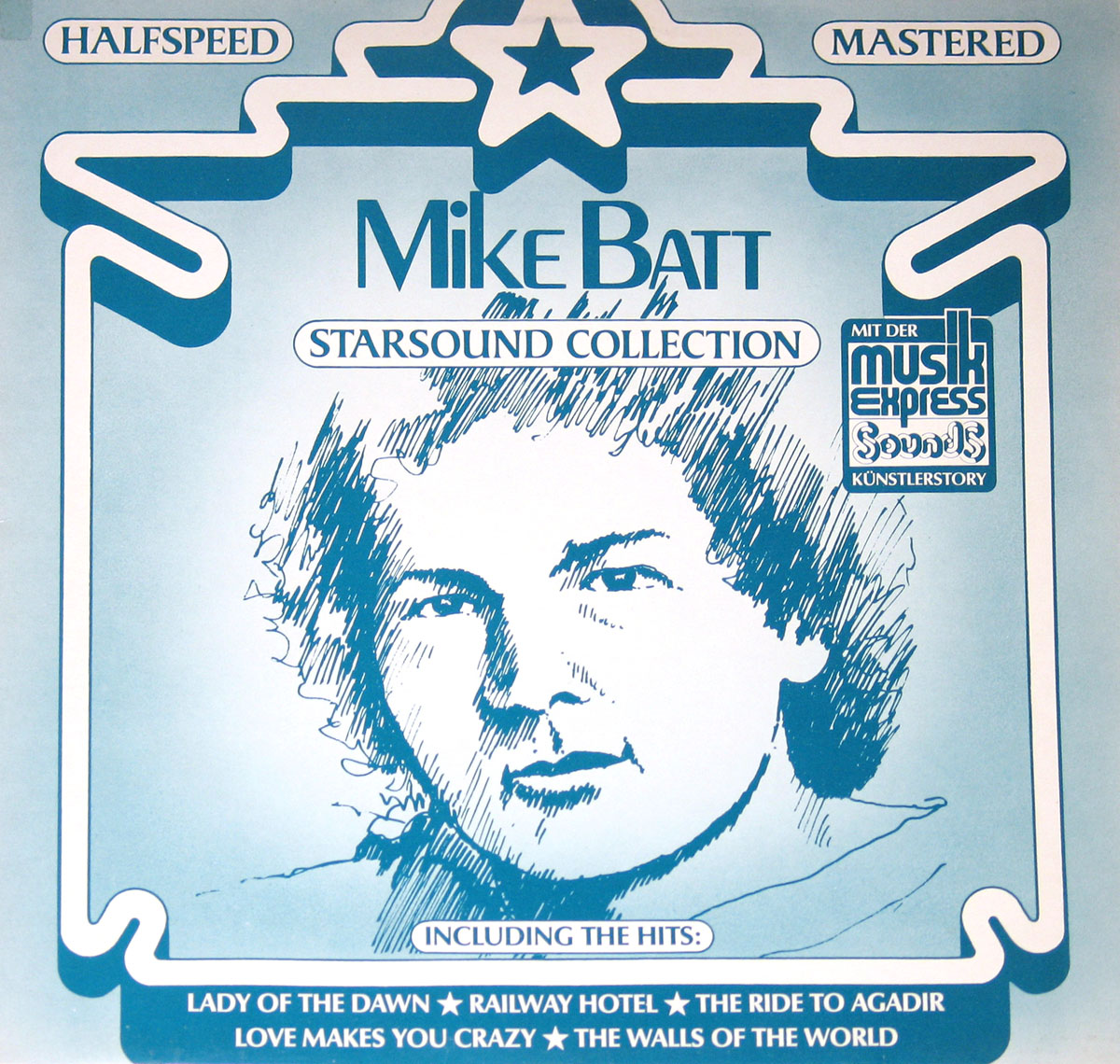
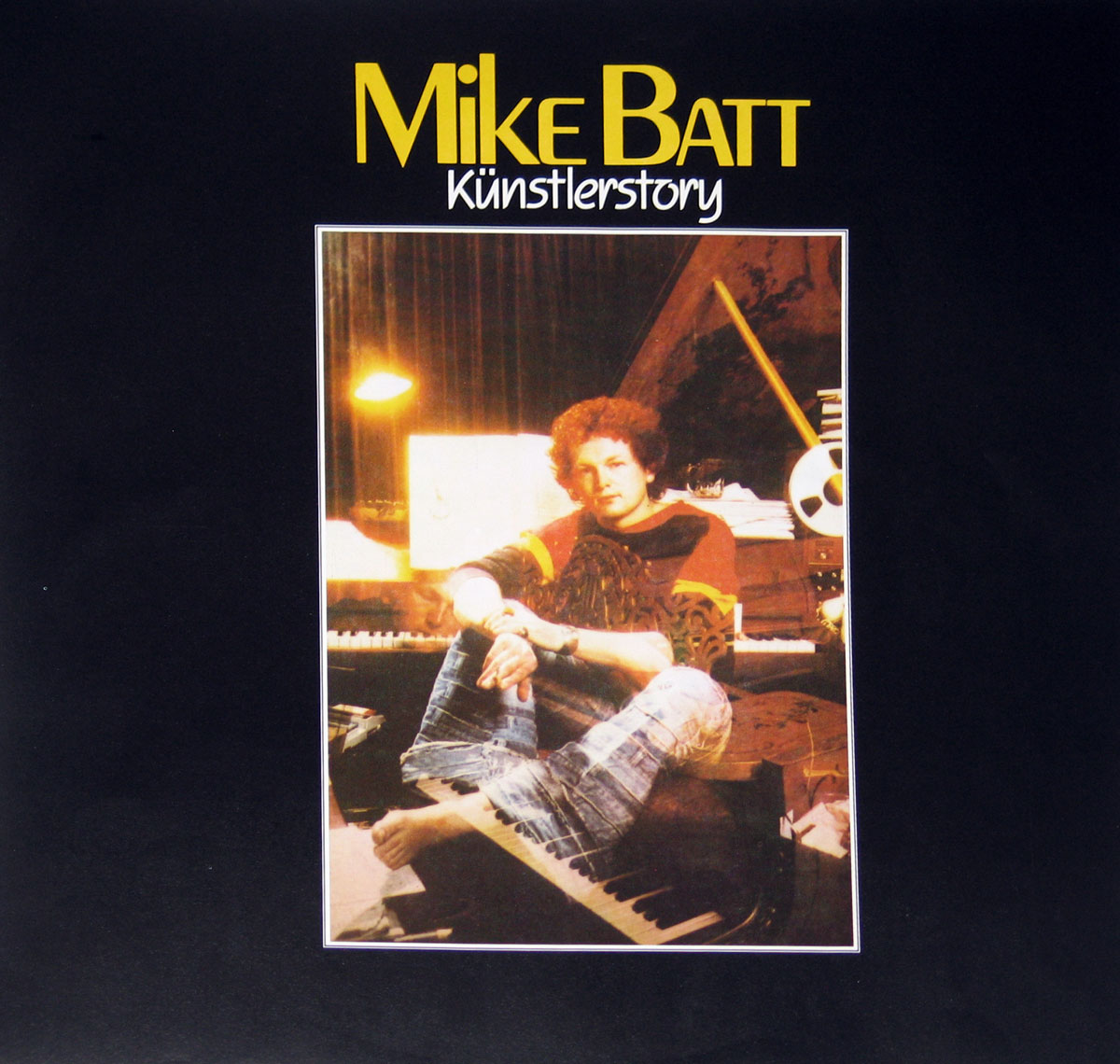
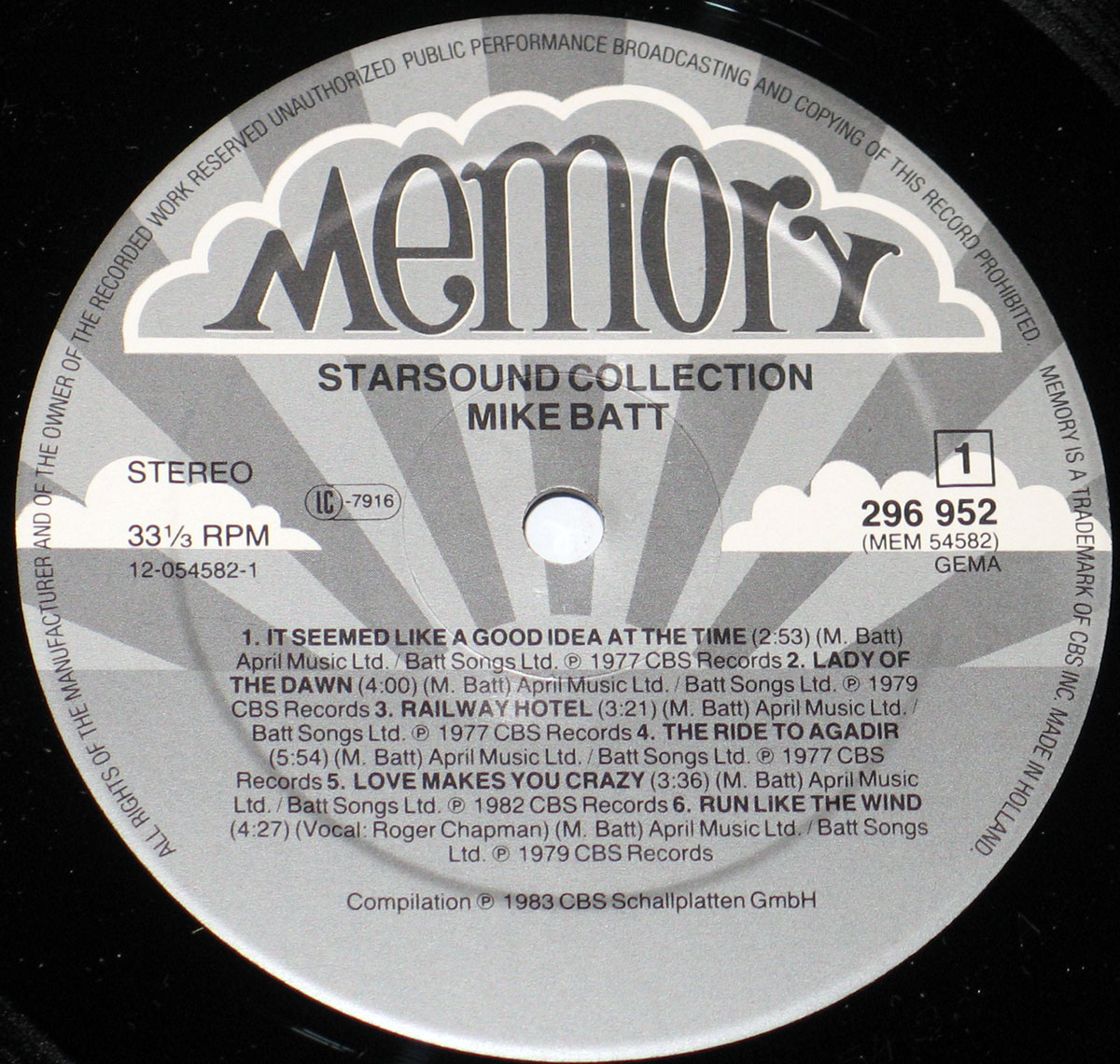
Mike Batt - Starsound Collection: Transcript of the original liner notes (German Language)
Note: These liner notes describe the start of Mike Batt's career and the making of the albums Super-Womble and Schizophonia.
The Beginning One of the few multi-talents in contemporary popular entertainment music is the Englishman Mike Batt, who managed within a few years to rise from an insignificant musician with the avant-garde band "Hapshash & The Coloured Coat" to a recognized composer. Remarkable in this context is the fact that Mike never studied music, but taught himself everything as an autodidact.
His career began at the age of 18, when he received the assignment to write an arrangement for an 18-piece orchestra. Mike went into seclusion with a stack of specialist literature and learned the basics of arranging overnight.
In the studio, he confidently presented his ideas – and after the recording was quite horrified by the result. This horror was not shared by his clients, however, because Mike had delivered exactly what was desired at the first attempt. The entry into this field, regarded as complicated, had been accomplished.
Next, Mike applied to the record company "Liberty", which was looking for several in-house writers via an advertisement. He was hired, quickly rose through the company hierarchy and eventually sat in the chair of head of production.
Although this job was very lucrative, Mike could not come to terms with the dry office atmosphere. He was more tempted to earn his living as a freelance composer and lyricist. He began his new activities as a writer of advertising jingles for television.
The small change was right, and then a single assignment brought him more income than everything before…
Super - Womble For the years 1974–76, the British government planned a nationwide environmental protection campaign in which a group of furry creatures, the "Wombles", appeared as goodwill ambassadors.
Mike was given the task of breathing musical life into the little creatures. He did this so perfectly that the singles by the "Wombles" constantly occupied top positions in the British charts over the following two years and were showered with gold and platinum records. Mike thus became well known, but success also had a downside: despite his first own single "Summertime City", which rose to number 4 in the British Top Ten in September 1975, Mike was now known as a specialist for profitable, uncomplicated "happy-go-lucky" songs that were successful, but lacking in sophistication.
Schizophonia In 1977 the decisive turning point occurred. Mike had decided to record a solo album on which he himself composed, wrote the lyrics, arranged and produced the tracks. He was fascinated by the idea of mixing classical music with rock sounds.
Many would already have said at this point that all of this had been done before: in 1967 with the Moody Blues, in 1969 with Deep Purple, in 1973 with Ekseption and in 1976 with Rick Wakeman. But what Mike Batt realized with his LP "Schizophonia" was at most only hinted at on the albums of the above-mentioned artists.
"Schizophonia" is an innovative creation that masterfully demonstrates that a fusion of baroque harmonies, Arabic melodies, folk, rock and ballroom swing is possible without offending the listener’s ear. The key work of the album is the track "The Ride To Agadir", which deals with the struggle for freedom of Moroccan rebels under Mohammed V.
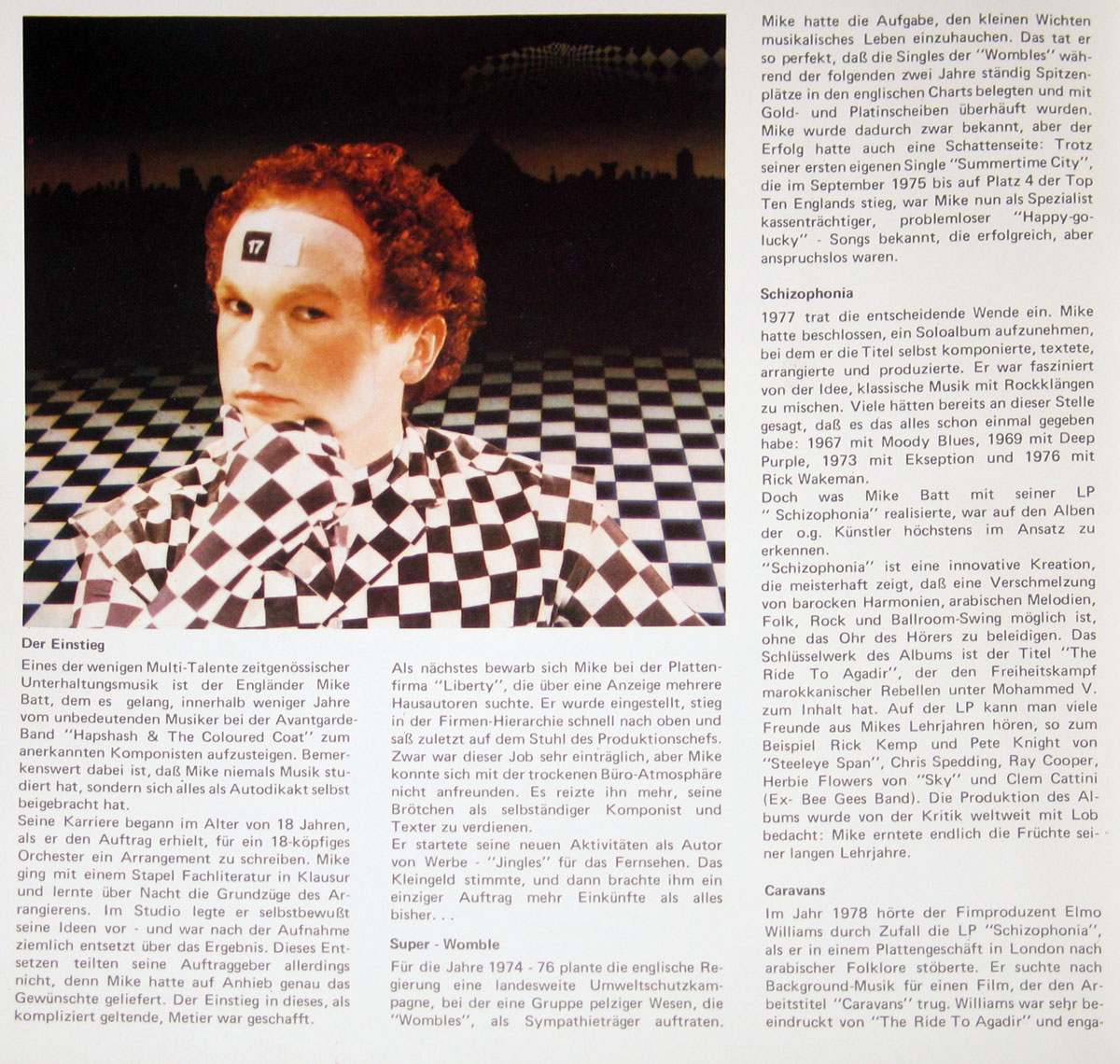
Mike Batt - Starsound Collection: Transcript of the original liner notes (German Language)
Note: These liner notes describe the start of Mike Batt's career and the making of the albums Super-Womble and Schizophonia.
Der Einstieg Eines der wenigen Multi-Talente zeitgenšssischer Unterhaltungsmusik ist der EnglŠnder Mike Batt, dem es gelang, innerhalb weniger Jahre vom unbedeutenden Musiker bei der Avantgarde-Band "Hapshash & The Coloured Coat" zum anerkannten Komponisten aufzusteigen. Bemer-kenswert dabei ist, da§ Mike niemals Musik studiert hat, sondern sich alles als Autodikakt selbst beigebracht hat.
Seine Karriere begann im Alter von 18 Jahren, als er den Auftrag erhielt, fŸr ein 18-kšpfiges Orchester ein Arrangement zu schreiben. Mike ging mit einem Stapel Fachliteratur in Klausur und lernte Ÿber Nacht die GrundzŸge des Arrangierens.
Im Studio legte er selbstbewu§t seine Ideen vor - und war nach der Aufnahme ziemlich entsetzt Ÿber das Ergebnis. Dieses Entsetzen teilten seine Auftraggeber allerdings nicht, denn Mike hatte auf Anhieb genau das GewŸnschte geliefert. Der Einstieg in dieses, als kompliziert geltende, Metier war geschafft.
Als nŠchstes bewarb sich Mike bei der Platten-firma "Liberty", die Ÿber eine Anzeige mehrere Hausautoren suchte. Er wurde eingestellt, stieg in der Firmen-Hierarchie schnell nach oben und sa§ zuletzt auf dem Stuhl des Produktionschefs.
Zwar war dieser Job sehr eintrŠglich, aber Mike konnte sich mit der trockenen BŸro-AtmosphŠre nicht anfreunden. Es reizte ihn mehr, seine Brštchen als selbstŠndiger Komponist und Texter zu verdienen. Er startete seine neuen AktivitŠten als Autor von Werbe - "Jingles" fŸr das Fernsehen.
Das Kleingeld stimmte, und dann brachte ihm ein einziger Auftrag mehr EinkŸnfte als alles bisher.. .
Super - Womble FŸr die Jahre 1974 - 76 plante die englische Regierung eine landesweite Umweltschutzkampagne, bei der eine Gruppe pelziger Wesen, die "Wombles", als SympathietrŠger auftraten.
Mike hatte die Aufgabe, den kleinen Wichten musikalisches Leben einzuhauchen. Das tat er so perfekt, da§ die Singles der "Wombles" wŠhrend der folgenden zwei Jahre stŠndig Spitzen-plŠtze in den englischen Charts belegten und mit Gold- und Platinscheiben ŸberhŠuft wurden. Mike wurde dadurch zwar bekannt, aber der Erfolg hatte auch eine Schattenseite: Trotz seiner ersten eigenen Single "Summertime City", die im September 1975 bis auf Platz 4 der Top Ten Englands stieg, war Mike nun als Spezialist kassentrŠchtiger, problemloser "Happy-go-lucky" - Songs bekannt, die erfolgreich, aber anspruchslos waren.
Schizophonia 1977 trat die entscheidende Wende ein. Mike hatte beschlossen, ein Soloalbum aufzunehmen, bei dem er die Titel selbst komponierte, textete, arrangierte und produzierte. Er war fasziniert von der Idee, klassische Musik mit RockklŠngen zu mischen.
Viele hatten bereits an dieser Stelle gesagt, da§ es das alles schon einmal gegeben habe: 1967 mit Moody Blues, 1969 mit Deep Purple, 1973 mit Ekseption und 1976 mit Rick Wakeman. Doch was Mike Batt mit seiner LP " Schizophonia" realisierte, war auf den Alben der o.g. KŸnstler hšchstens im Ansatz zu erkennen.
"Schizophonia" ist eine innovative Kreation, die meisterhaft zeigt, da§ eine Verschmelzung von barocken Harmonien, arabischen Melodien, Folk, Rock und Ballroom-Swing mšglich ist, ohne das Ohr des Hšrers zu beleidigen. Das SchlŸsselwerk des Albums ist der Titel "The Ride To Agadir", der den Freiheitskampf marokkanischer Rebellen unter Mohammed V. zum Inhalt hat.