Blues Legend Unveils Untold Stories: Guitars, Addiction, and the Future of Music
Guitare Et Claviers (France) March 1989
He ultimately managed to do better, becoming the leader of white blues, his towering albino frame haunting the 1970s relentlessly until he (almost) vanished into the limbo of obscurity.
Too much alcohol, too much dope, and too many tours—eventually, the albino hung up his guitar to begin the inevitable journey through the desert. Meanwhile, his hair grew. That was something, at least.
Today, like Samson, he returns stronger, half-blind but in good shape. His latest album, Winter of 88 , is a true guitar anthem, a declaration of love as blue as the album cover, as blue as the music he has always honored, either solo or when producing and supporting Muddy Waters for his album Hard Again .
The electric rabbit thus began the winter with us, starting with a short but thunderous concert at La Cigale.
In his dressing room, Winter talks about Thunders; same cadaverous pallor, same mortal exhaustion, but with more kindness and humility. He speaks with his eyes closed, sometimes suffering, sometimes smiling.
What do you think about the revival of blues today? I love these guys—Jeff Healey, Stevie Ray Vaughan... I saw Stevie Ray play in Texas when he was just a kid back then. In fact, my first bassist is currently playing with him. Stevie is very talented. Jeff is really amazing. I've always wondered how he does it, with his guitar on his lap. He probably thinks about the same things I do, but with him, it sounds different. I really like these guys a lot; Robert Cray as well. They carry on the blues tradition, which is very important. Thanks to them, kids are discovering the blues and won’t forget it. Back in the days of Muddy Waters and Howlin' Wolf, people like Eric Clapton or the Stones did everything to make sure the world recognized the genius of those guys. Stevie, Jeff, and Robert are taking up the torch, and that's good.
And what about the Fabulous Thunderbirds, Omar And The Howlers? The T. Birds used to be much more blues-oriented. They were real purists and it took them a long time to land a record deal. Now, they're making more commercial music. It's a bit of a shame.
Do you still feel like you're learning guitar? Of course! If I had nothing left to learn on guitar, I’d be terribly bored! When I’m on tour, I play a lot and inevitably get better. Then, I stop for two or three weeks, and my playing suffers a lot. When I start again, I have to work twice as hard to recover what I’ve lost. There’s no secret: if you want to make good music, you have to practice non-stop.
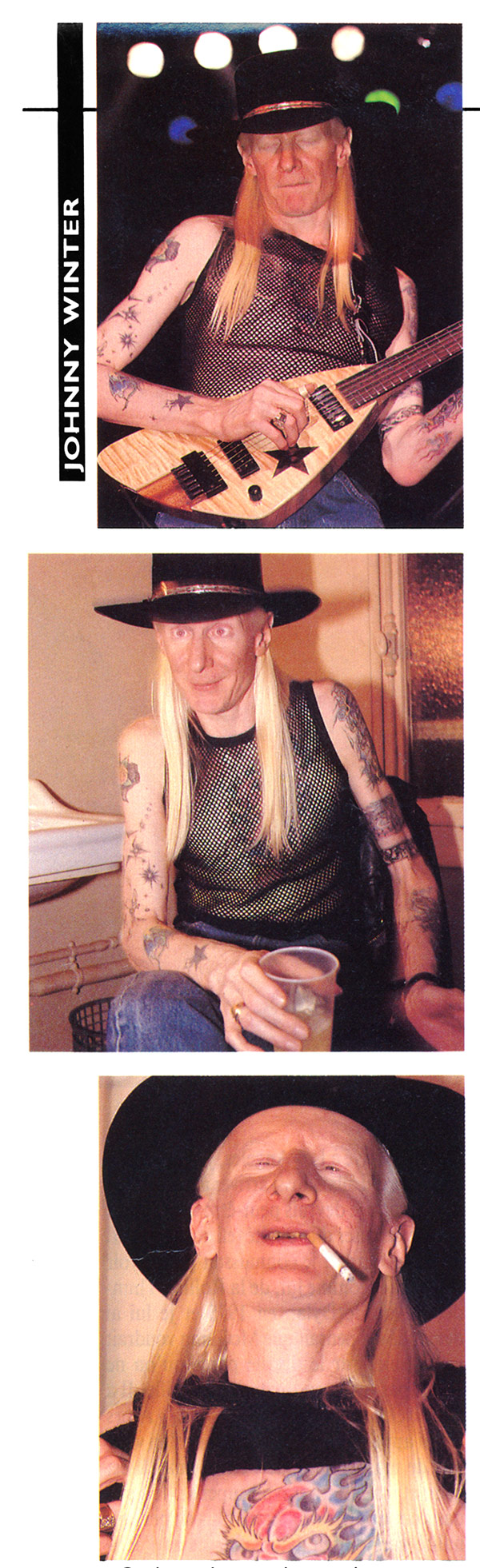
Why did you choose the Erlewine Lazer guitar? I wanted a “travel” guitar for touring, something good but not cumbersome, so I could practice on the road. I never planned to use it on stage, but one night I broke a string on my Firebird, so I picked up the Lazer as a replacement. To my surprise, it sounded amazing, so I’ve recorded almost all my albums with it since. And of course, I use it in concerts. Every time people see me play with such a strange-looking guitar, they’re surprised. But I don’t care—it has an incredible sound. The six-system, with the tuners on the bridge, eliminates a lot of vibrations.
What open tunings do you use for slide guitar? On Highway 61 or Mojo Boogie , it’s an open E or D. There are two others I use a lot: open A and G. Open A is very country blues—it sounds like Charley Patton or Robert Johnson. Open E and G are perfect for the blues, but they sound more modern.
What do you think of the new guitar stars: Malmsteen, Satriani, or Steve Vai? These guys are amazing—musically very talented. Stylistically, they’re doing something completely original, very different from what we’ve seen so far. It’s like they’re playing a different instrument. With the hammer technique they use to the extreme, it’s as if they’re playing with both hands! It’s very interesting. When I listen to them, I feel very old! (laughs). I’ve tried so many times to play like that—the hammer-ons and all that stuff—I’ve worked really hard, and it still doesn’t work! I think it would take me at least seven years to get started with that technique. I’m old school! But my favorite is still Stanley Jordan. When he plays, it’s like there are three or four guitarists at once!
If you had to go to a desert island, what would you take? An electric guitar, a Dobro, Muddy Waters’ work, or a woman? (Laughs.) That’s an easy question, really easy! A woman, obviously! I can sing, and I can make a guitar! What would I do with Muddy Waters’ discography? But if I had to choose between an electric guitar and a Dobro, I think I’d choose the electric guitar.
Who are your favorite guitarists? First, I’d say Robert Johnson; he was the greatest, totally immersed in his music. When he played, the atmosphere was really strange, intense. Then, there’s T. Bone Walker. When it comes to electric guitar, most people think of B.B. King. But B.B. King learned everything from T. Bone. Well, almost.
What do you think of Lonnie Johnson? Lonnie was a wonderful guitarist, but I don’t feel like I learned much from listening to him. Compared to him, T. Bone was a real teacher for me; I learned so much from him. He really influenced the person who created electric blues—Johnson for slide and electric guitar, and T. Bone for electric guitar. Those two were the greatest. I also learned a lot from Muddy Waters because his style is very simple, very easy to replicate, but profoundly original—not to mention his singing! There are a lot of other musicians who have influenced me, not necessarily guitarists. I have enormous respect for people like Otis Spann, Ray Charles, or Little Walter. All of them, very different from each other, are still a source of inspiration for me.
After all these years, you still have faith… The blues is the story of my life, what I love most.