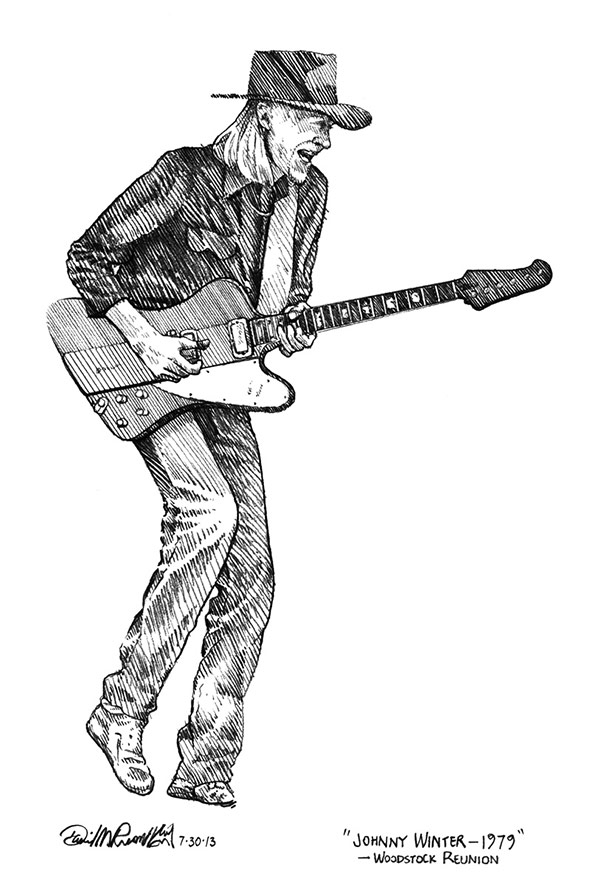
Johnny Winter — Saint or Sinner?
17 March 1974: New York Times
By Loraine Alterman
"Saints & Sinners" (Columbia KZ-32715), Johnny Winter's sixth album, may prove to be his biggest seller and finally justify all the hoopla that surrounded his signing by Columbia five years ago. At the time, he was touted as the most fantastic white blues guitarist alive and given a large, well-publicized advance. Like any hype, the expectations created could never be satisfied. Although Johnny won fame and fans, he never truly attained the superstar status of a Jimi Hendrix or an Eric Clapton.
The pressures of constant touring hit him hard and threw Johnny into a battle with drugs, which eventually caused him to drop out of the music scene for a year. It was no accident that his first album after emerging again was titled Still Alive And Well. Now, almost a year later, Saints & Sinners presents Johnny in a driving rock and roll setting. His guitar certainly screams out bluesy strains, and his throaty voice hollers the lyrics with intensity, but the overall sound is more varied thanks to Rick Derringer's superb production.
Johnny's voice and guitar attack the Leiber and Stoller classic "Riot In Cell Block No. 9" with fire, and Chuck Berry's "Thirty Days" packs a hard-driving punch, enhanced by Edgar Winter's tinkling tack piano. On "Blinded By Love," written by Allen Toussaint, Johnny adopts a lowdown, funky mood vocally and echoes that spirit in his guitar solos. The material, including a new Van Morrison tune called "Feedback On Highway 101," showcases Johnny at his best. Most importantly, Saints & Sinners has the kind of excitement that will hook even those who haven't previously tuned into Johnny Winter.